
How to Make a Shorts Series That Keeps People Watching
The single viral clip was never the business. The audience that comes back is. And in September, YouTube handed creators the structure to build one: Shorts Series, a feature that lets you organize individual Shorts into seasons and episodes, with custom thumbnails and sequential playback. It is the platform making serialized short-form a lane anyone can build in. Here is how to use it, and how the consistent, batch-driven workflow behind it is what actually grows an audience.
Why the series beats the single clip
YouTube’s own data at its September event made the case better than any guru could: microdrama content passed 6.5 billion views in the first half of 2026, watch time for microdramas grew more than 50 percent year over year, and microdrama views on TV rose more than 90 percent. The format that used to need a writing room and a production budget was pulling numbers on the biggest screen in the house.
The lesson for a solo creator is not “make microdramas.” It is that serialized content makes the next piece the obvious click. A single clip asks the algorithm to surface you again tomorrow. A series makes the viewer choose the next episode, which is a different and more durable kind of attention.
What Shorts Series actually does
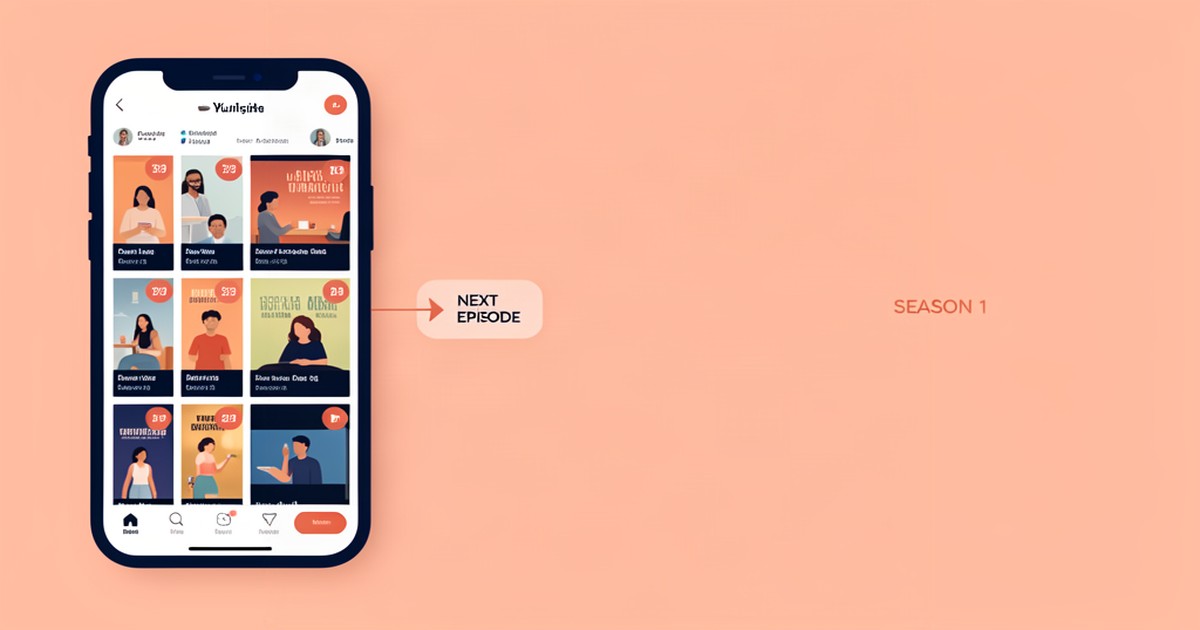
Shorts Series lets a YouTube Partner Program creator group Shorts into structured seasons and episodes. You add custom thumbnails per episode, and playback runs sequentially, so finishing one Short leads into the next. In other words, the “next episode” click is built into the shelf. You still make each individual Short, but now the collection behaves like a show instead of a stack of one-offs.
A serialized workflow that keeps you consistent
Here is the part that decides whether a series works: consistency. A series with three episodes posted over two months does not exist. A series is a promise, and you can only keep the promise if posting is cheap and repeatable rather than a weekly decision that hangs on your energy and motivation.
That is exactly the gap a production-manager mindset closes. The job you are really doing as a solo creator is not making one great video. It is shipping on a rhythm, week after week, with the same identity so the audience recognizes you. And that is the job AI Influencer Suite was built to take off your plate. One connected flow takes a script to an image to a video to captions to hashtags and onto a content calendar, so a week of posts can be generated and scheduled in one place. Your avatar’s face, style, and brand voice are stored once and reused across every asset, so episode three looks, sounds, and feels like episode one.
Batch the work when the ideas are flowing, then let the calendar handle the rhythm. That is how a one-person operation runs a show that looks like a team.
Structure a 5-episode season in an afternoon
You do not need a studio to launch a series. Try this:
- Pick one repeating theme you can produce with your existing assets. A process, a niche explainer, a “before and after,” a character. One through-line, not five random videos.
- Batch five episodes in one session. Write all five scripts, generate all five videos, caption all five at once. The AI handles the heavy lifting, you keep the calls.
- Make episode one self-contained and end on a pull. A good series episode rewards the viewer now and makes the next one obvious. “Next time, here is what happens when X changes.”
- Upload as a Series with custom thumbnails. Use the structure YouTube gives you so the sequential playback does the retention work for you.
- Let the calendar run it. Schedule the batch on a rhythm you can actually hold, and free your daily decision-making to make better content instead of debugging logistics.
Keep identity consistent across every episode. If your face, voice, and style drift, the “series” reads as random uploads from different people, and the audience has no reason to follow.
The bottom line
YouTube just made serialized short-form a buildable lane, and the data says the audience is already there. The creators who win it are not the ones with the biggest budget. They are the ones who can post on a rhythm, keep one identity, and make the next episode the obvious click. The structure is now free. The consistency is the work. And that is exactly the kind of work a production-manager tool exists to make cheap.
Nudge: before you chase another single viral clip, try building one five-episode season on a theme you can actually sustain. Generate the batch, schedule it, and let the series do the retention work.
Call to Action
Try AI Influencer Suite free and see the connected production flow: generate an image from your avatar, animate it into video, add a script, captions, and hashtags, and schedule it all to your content calendar in one place.
Free: 10 images and 2 videos, lifetime, no credit card.
Creator: $19/mo, unlimited images, 10 videos a month.
Pro: $39/mo, unlimited images, 25 videos a month.
Video packs are one-time: 5 videos for $8, 15 for $20, 40 for $45, none of them expire.
Leave a Reply