
Why Creators Should Own Their Audience in the AI Agent Era
The algorithm was never your friend, and now it has a competitor
For twenty years, the deal felt fair. You make the content, the platform shows it to people, and in exchange you rent access to an audience you never actually owned. YouTube owns the subscriber list. Instagram decides which followers see a post. Spotify controls how much of your catalog anybody discovers. Even when someone deliberately follows you, an algorithm still sits in the middle deciding what surfaces, when, and how much attention it earns.
That arrangement was always a trade you made quietly. It became normal, so you stopped questioning it.
Now a second middleman is arriving. Alongside the ranking algorithms, there is a growing layer of AI agents that recommend, summarize, and choose what people see and buy. When someone can ask an assistant to find them the best thing in a category instead of scrolling the feed, the platform is no longer the only thing standing between you and your audience. The agent is too. The recommendation that used to come from a feed ranking now comes from a conversational answer that points somewhere else entirely.
This is the moment to ask a question most creators have avoided: who actually owns the connection between you and the people who follow you? Because the answer determines whether you survive the shift.
The middleman problem is getting more crowded, not disappearing
Here is the plainest way to see what is changing. A few years ago, a restaurant that wanted diners had fewer choices about how customers found it: show up in the delivery marketplace or miss the traffic. A small startup recently proved that can change. It lets diners order from participating restaurants directly inside a chat assistant, sending the order to the restaurant instead of through the delivery platform, for a flat fee where the platform was taking 15 to 30 percent.
The technology was the easy part. The real shift was where the customer relationship lived. When an assistant becomes the interface people use to find and order things, the app that used to control discovery no longer owns the customer. But notice what did not disappear: the middleman. You traded the feed for the agent. The discovery layer just changed hands.
The same thing is now happening to content. If an AI chooses which creators to recommend, telling a person what they should watch, read, or follow, then the recommendation power that used to belong to a feed belongs to a new system. You can make great content and still be invisible if the agent never points anyone at you.
That is why owning your audience is no longer a nice-to-have. It is the one part of the equation you control. The platform might change its algorithm. The agent might recommend someone else tomorrow. But the people who follow you because of a direct, genuine relationship, people you can reach without anyone’s permission, are yours.
You do not own a million followers. You rent access to them.
It is worth being blunt about the accounting. A creator can have a large following and still have no reliable way to reach those people. Reach depends on platform ranking, engagement signals, and whatever the platform’s advertising strategy favors that quarter. You are not creating only for an audience. You are creating for the machine that stands between you and it.
That is the trap the new agent layer makes worse. If agents begin to control the recommendation layer, you might be creating for two machines: the feed ranking and the agent that tells people what to consume. Neither one is your customer. Neither one owes you anything.
The durable moat, in every era of this industry, is the direct relationship. It is the person who wants to hear from you because you showed up consistently and told them something true. That is why so many creators are scrambling to collect email lists, build their own communities, and take their most engaged audience somewhere they control. It is not nostalgia. It is survival. The value of a relationship nobody can revoke only goes up as more middlemen crowd in.
Owning your audience starts with showing up consistently
Here is the uncomfortable part: an owned audience is not built by a single viral post. It is built by showing up over and over with work that looks like you. The person who follows you because of one hit video has not decided to trust you yet. The person who sees you reliable for months, whose feed reliably contains your work, is the one who will follow you anywhere.
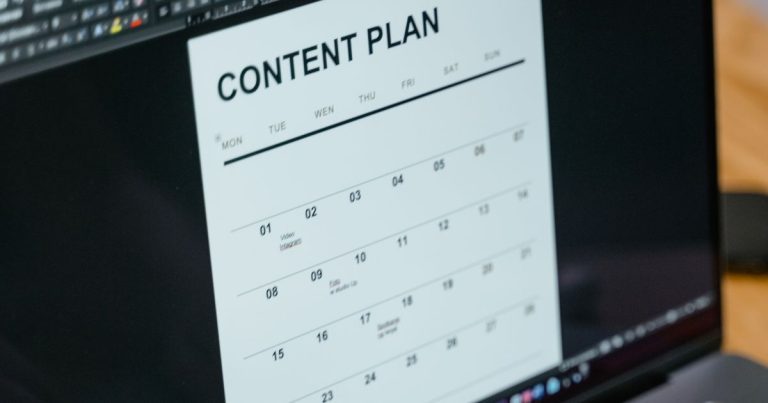
Consistency is exactly where most solo creators get stuck. Not because they lack ideas. Because the production-manager work is exhausting. Every piece of content is a chain of handoffs: idea and script, image, video, caption and hashtags, a slot on the calendar, publish. Each step depends on the last, and somewhere in between you export, re-upload, resize, and re-explain who you are to a different app. By the end of the week you have spent more time being the courier between tools than actually making anything. So you post less. And a quiet page is the fastest way to lose the audience you were trying to build.
That is why the tools you use matter as much as the content you make. If your stack makes consistency harder, you will not be consistent, and you will not own an audience, no matter how good you are. The tools that help are the ones that keep your brand voice and reference images in one place, so you stop re-uploading your photos and re-typing your voice every single week. When the output of one step feeds the next directly, you stop being the courier and start having room to actually show up.
You do not need five subscriptions to build a real relationship
There is a tempting version of this strategy that looks like hoarding tools. Five more apps, five more logins, five more places to re-upload your photos and re-type your brand voice. The research keeps coming back to the same uncomfortable truth: you do not need five AI subscriptions to make content. You need one thing that actually works and the discipline to keep showing up. Every tool you add is another handoff, another seam where you leak time, another reason to skip a week.
The audience you want to own is not built by producing more. It is built by producing reliably, on brand, in a voice people recognize. Repetition, recognizability, and trust. Those come from a system you can keep going, not from a pile of disconnected tools fighting for your attention while you chase a schedule.
Trust is the asset that cannot be outsourced
Here is the part that no agent, no algorithm, and no marketplace can manufacture for you: trust. Audiences are more sensitive than ever to content that does not feel real, and platforms are making it easier for people to tell. The honest move is the durable one. The disclosure era rewards creators who are straight about what is synthetic and what is not. When you are clear and consistent, the people who follow you know what they are getting, and that is a relationship no middleman can recapture.
An AI tool can generate your images, your video, your captions, and your calendar slots. It should not replace you. You are still the person who decides what is on brand, what is true, and what goes out. The tool removes the production-manager drag between you and the audience. It does not remove you from the equation. That distinction, human judgment on top of machine output, is exactly what keeps a direct audience relationship real instead of rented.
Own the relationship, rent the distribution
The practical way to read all of this is simple. Rent the distribution, own the relationship. Let the platforms show your work, welcome the new agent layer if it surfaces you, but build the thing nobody can take away: a recognizable voice, a consistent cadence, and a group of people who trust you directly.
That is the long game, and it is the only game that survives platform changes. The feed will change. The agents will change. The marketplaces will change. An owned audience is the single thing that does not change with them.
Call to Action
If consistency keeps slipping because the production-manager work between your tools is eating your week, AI Influencer Suite is built to remove that drag. Build your avatar and brand voice once, then generate on-brand images, videos, scripts and captions and schedule them to a content calendar in one connected flow. You approve what goes out. Start free with 10 images and 2 videos for life, or upgrade to Creator at $19 per month or Pro at $39 per month when you need unlimited images and more videos. Non-expiring video packs add 5 videos for $8, 15 for $20 or 40 for $45, so your access does not depend on a monthly meter.